


It came as a surprise to me when I realized that… I don’t have the best time management skills. In the same way I can enter a flow state and get so much done in a short amount of time, I can just as easily let an entire afternoon slip by as I toggle between tabs and open my email for the thousandth time. What ends up happening is, more often than not, I pay for it at the end of the week, and spend my weekends catching up on all the work and myriad to-dos I didn’t get to.

Over the past few months, I’ve developed a strategy for myself I’m calling ‘schedule blocking’ that has completely changed the way I work and approach each day, helping me pace myself and focus so that I can work efficiently and have more time for rest. The idea is to map out a schedule in your calendar, as scaffolding for a daily routine. Here’s how I created mine:
Begin with priorities. I began by writing a list of everything I have to do in a day, like work on Morning Person, answer emails, work on my book, eat lunch, workout, etc. Then, I made a list of things that are important to me, like slow mornings, long meals, a midday walk. I estimated how much time each “task” should take me, and created blocks—two hours for writing, an hour for lunch, etc.
Map onto your day. From there, I arranged the blocks into a schedule I felt made sense, giving equal weight to both my responsibilities and things that are personally important to me. (I found it easiest to use my Google Calendar for this!).
Rearrange until you find your fit. For a few weeks, I tried different schedule combinations. For example, I worked out at lunchtime, until I found it really pulled me out of my work flow and took too much time in the middle of the day, so I bumped it to the end of the day.
Add in flex days. While Monday, Tuesday, and Thursday are always the same, I try to schedule all of my meetings and appointments on Wednesday and Friday afternoons, to block them together.
Remember it’s just a scaffolding. While I follow it most days, I also listen to my body and my needs. If I’m in a great writing groove, I keep going with it; or, if I need to get out of the house, I go for a walk. It’s there to support, not punish.
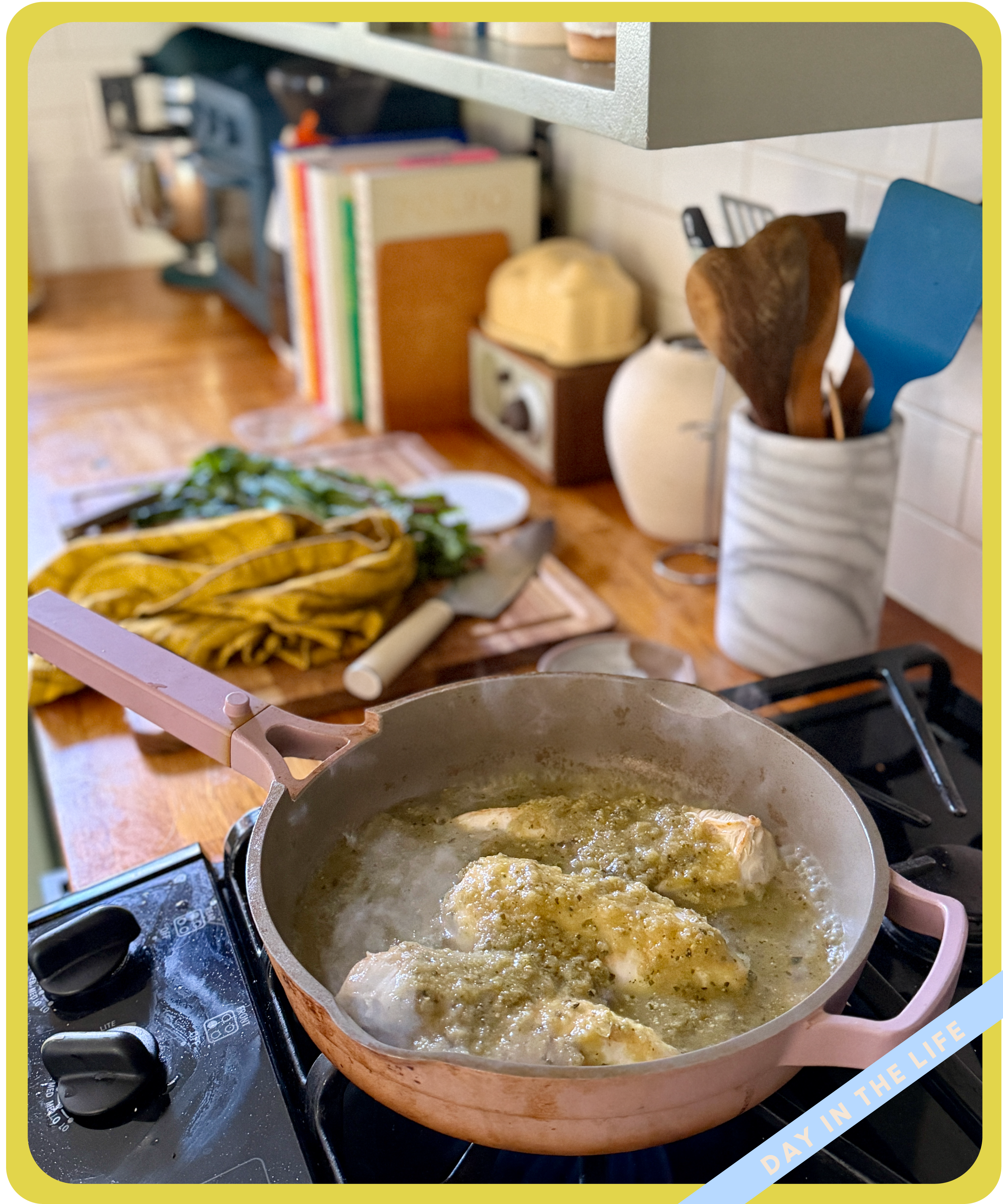
When I wrote about ‘schedule blocking’ last month, it became my most-read post in March, so I figured I would go into more detail here, with a ‘day in the life’ so you can see how it looks on a fairly average day!
